
Trace
A private workspace for classroom assessment.
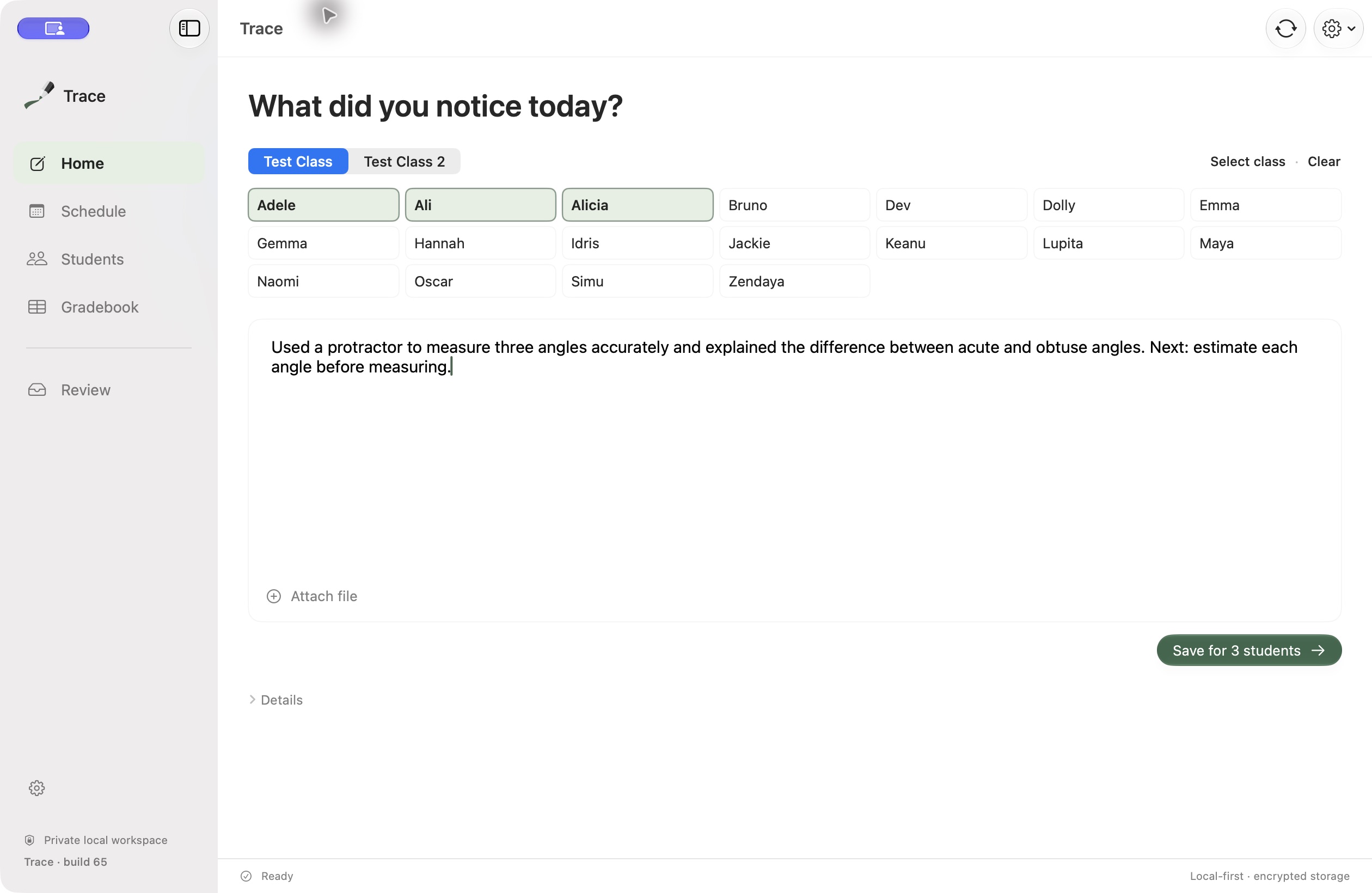
In my Grade 6 classroom, I want to record what I notice and get back to the lesson. In the example below, a note about angles is ready to save for three students. I can write it once and find it in each student’s profile later.
All examples are fictional.
Privacy was a starting point.
Records and attachments are encrypted on my devices, with no Trace cloud server. My Mac and iPhone exchange evidence over a local network after I pair them. Text recognition and subject sorting run locally. I choose what to export and where to keep backups.
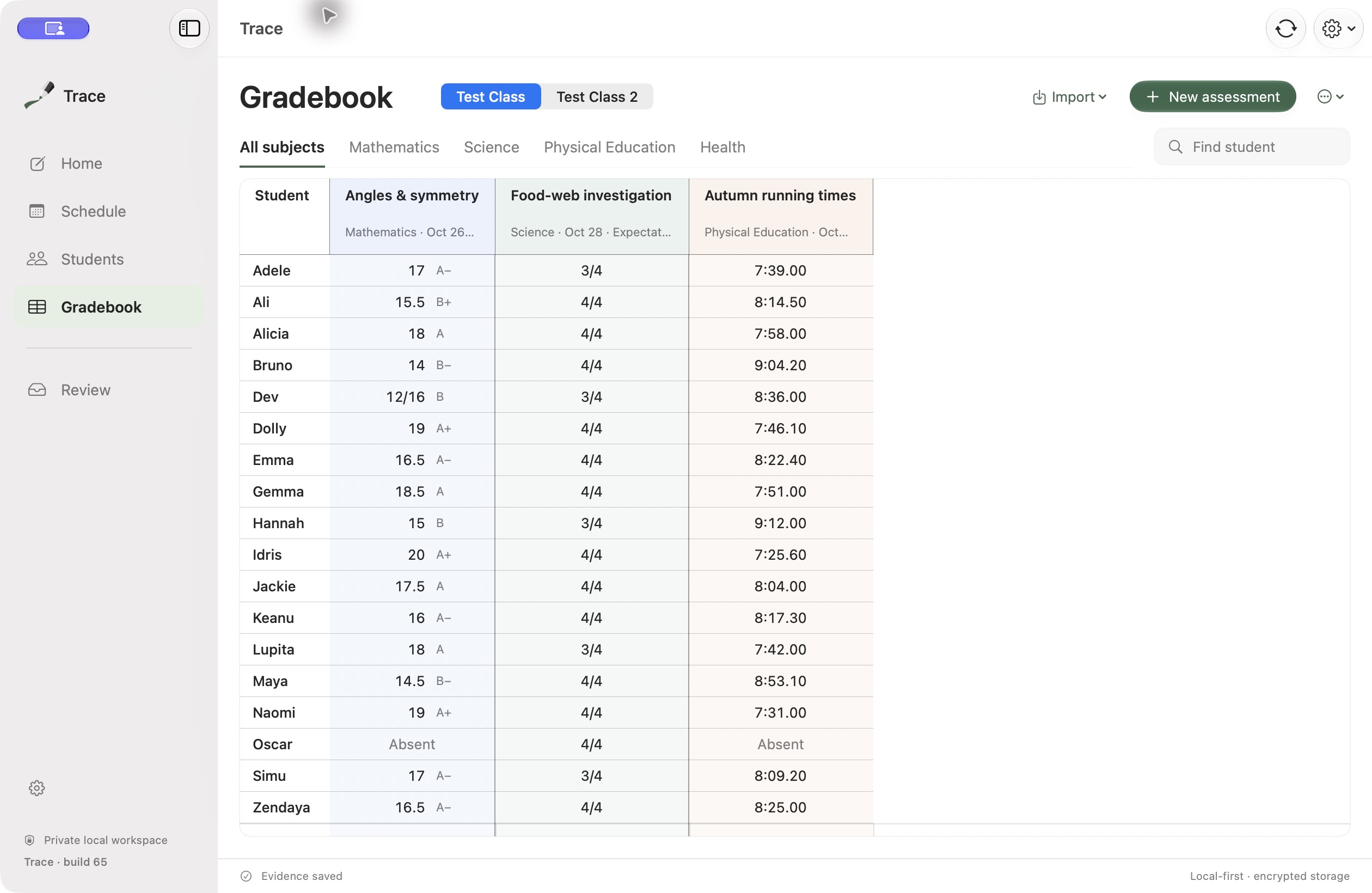
The class view
Marks, checklists and running times sit together. I can see where evidence is missing as I plan what comes next.
What I’m looking for
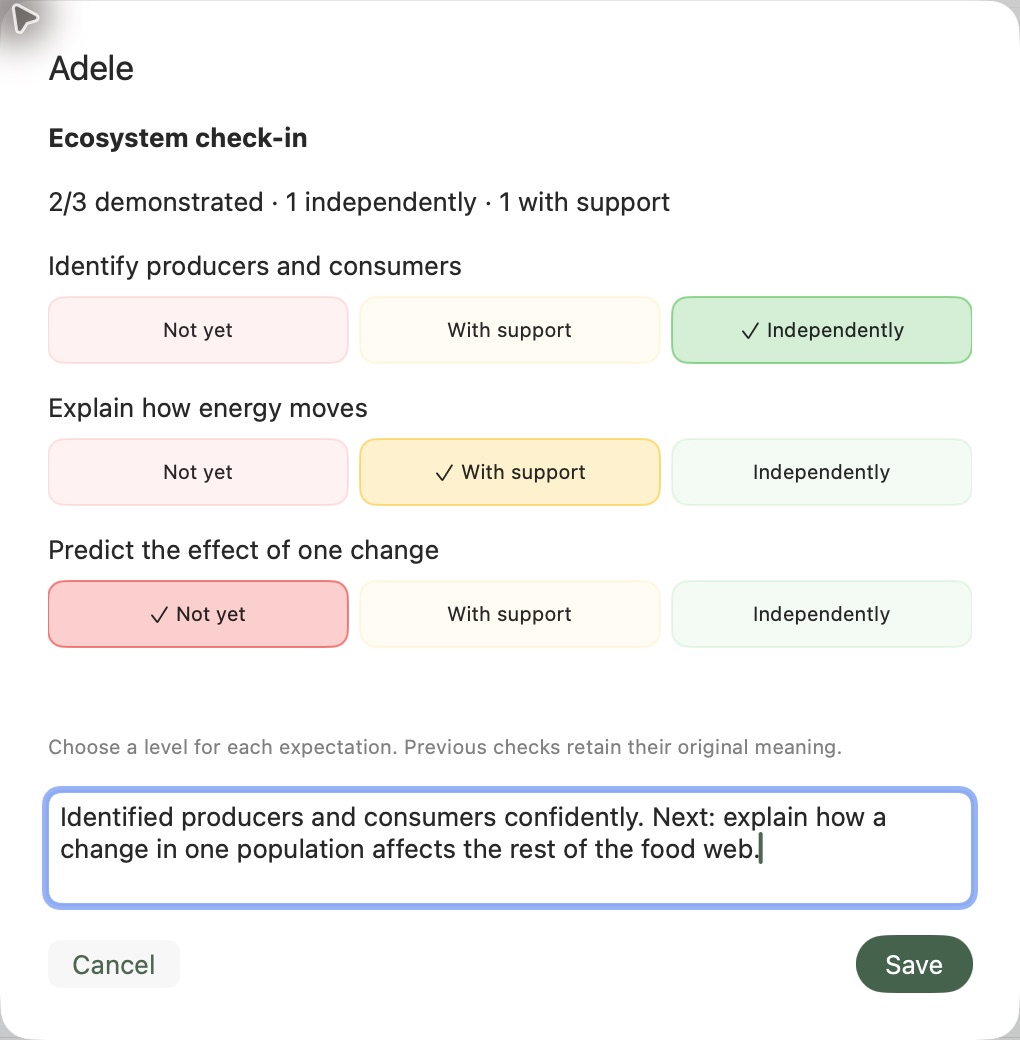
The checklist keeps the criteria alongside my notes. I can record what a student did independently, where they needed support, and what to revisit.
Student conversations
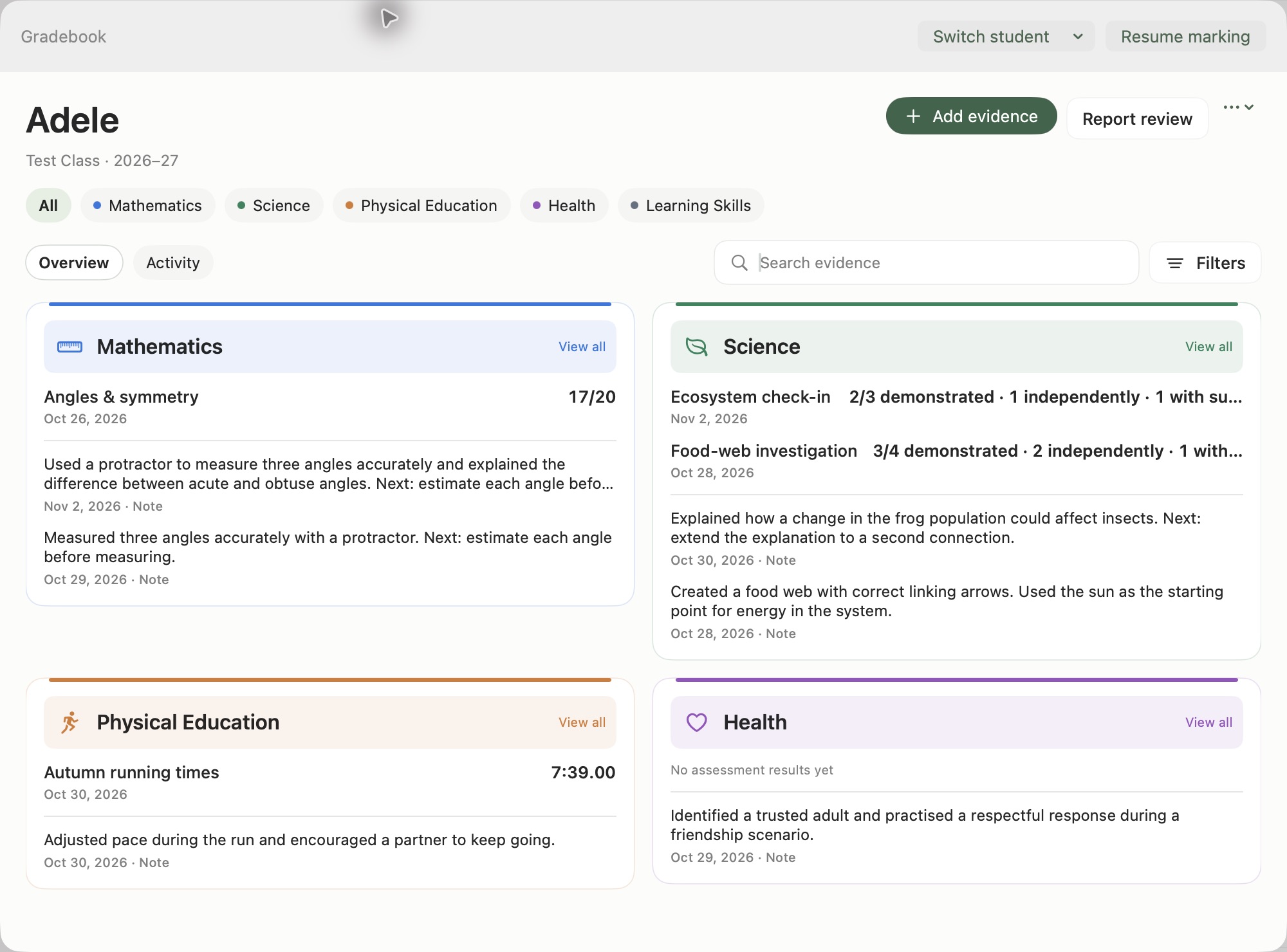
Each student’s profile brings the evidence back together by subject. There’s something concrete to look at when we talk about their learning and next steps.
What I’m working through
Trace runs on Mac and iPhone. I’m still refining how it fits into a busy teaching day. Sorting suggestions and scanned marks need checking; assessment decisions and report-card judgements stay with me.
My MET work
Trace carries forward questions from Feedforward, an earlier group project in UBC’s Master of Educational Technology program. My ETEC 543 work on learning analytics brought me back to organizing informal evidence, and to questions about privacy, bias and who gets to interpret a student’s learning.
Research on formative assessment and feedback offers support for using observations in teaching and returning evidence to students. It’s useful context for what I’m experiencing in my classroom.
A little research behind the work
These studies support the assessment practices I’m exploring. They did not evaluate Trace or measure its effect on my workload.
- Ruiz-Primo & Furtak (2007). Exploring teachers’ informal formative assessment practices and students’ understanding in the context of scientific inquiry. Journal of Research in Science Teaching, 44(1), 57–84. A study of three middle-school science classrooms found an association between using students’ responses to guide teaching and stronger assessment performance.
- Graham, Hebert & Harris (2015). Formative assessment and writing: A meta-analysis. The Elementary School Journal, 115(4), 523–547. Across studies in Grades 1–8, feedback to students improved writing quality; teacher monitoring alone did not show a meaningful benefit in the studies reviewed.
Work in progress · November 2026